

Israel claimed Iran was preparing nuclear weapons and missiles to reach the US, but Joe Kent says no such threat existed
Significant revelations regarding the war launched by the US and Israel against Iran have been brought to light by Joe Kent, the first American official to resign from his post—specifically as head of the US National Counterterrorism Center—to express his opposition to military operations against Tehran. Indeed, Kent reveals a strategic deadlock currently facing the US: all powerful political figures and Iranian officials who restrained those seeking nuclear weapons development have now been eliminated.
"The assassination of Supreme Leader Ali Khamenei, I think, has a dual nature. In essence, a person who was blocking the nuclear program was killed," Kent stated. This argument is increasingly heard from Western officials and analysts, especially following the killing of the Secretary of the Supreme National Security Council of Iran, Ali Larijani, one of the most moderate and iconic Iranian politicians. The logic follows that the US and Israel, by neutralizing moderate Iranian officials, are essentially clearing the path for the regime's most hardline elements.
Nothing holds them back
According to Kent, if Iran indeed possesses the necessary materials, a nuclear bomb can now be built. "Because we killed the only one who was holding it back. In fact, we killed several such people. I am referring to us and Israel. We will be blamed for this," said Kent. In an extensive interview with American journalist Tucker Carlson, he essentially argued that Israel was the one that dragged the US and President Trump into the war against Iran, as he claimed there was no immediate threat from the Iranian nuclear program.
Only Trump
Nevertheless, Kent estimated that there is still room for a negotiated deal between the US and Iran, despite the ongoing military operation. In fact, he emphasized that only the American president can achieve this. "I believe that right now there is still potential for a deal. And I think only Donald Trump can pull it off," Kent noted, arguing that before this happens, the American president must restrain Israel, which is not listening to American pleas to avoid striking specific targets.
"They will postpone it for a week, but they won't listen to you," Kent said, referring to the Israeli attack on the Iranian gas field at South Pars. According to Kent, if Trump manages to limit Israel, he will have room for a diplomatic maneuver with Iran. "Already, through his Secretary of Commerce, he spoke about lifting sanctions on part of the Iranian oil that is already at sea. I pray we are truly moving in that direction, but the timing is critical," Kent underlined, stressing that there is still a window for talks and agreement.
What Israel fears
As Kent explains, this is exactly what Israel fears: that the US will manage to reach a deal with Iran. For this reason, he points out, Tel Aviv intervened and spoke of a nuclear threat. "This is what the Israelis fear. Because they knew that President Trump and his negotiating team could probably reach agreements... When we were discussing (uranium) enrichment, I believe there was real potential for a deal then," Kent stated. It was then, he says, that Israel actively intervened, insisting that Tehran was preparing nuclear weapons, developing missiles capable of reaching the US, and that action had to be taken.
Negotiations were going well
This, according to Kent, affected the chances of a deal with Iran. "In my opinion, these negotiations were going very well. They kept meeting, discussions were progressing, they had real talks about enrichment... I think there was potential for a deal then," the American official noted, mentioning that the military operation of June 2025, the 12-day Operation Midnight Hammer, reduced that probability.
"But the Iranians are very, very calculating. When they reacted to Operation 'Midnight Hammer,' they did so very precisely. They launched the same number of missiles as we dropped bombs. And that was a message to us that they are still truly interested in reaching a deal," Kent estimates.
The messages Netanyahu is sending
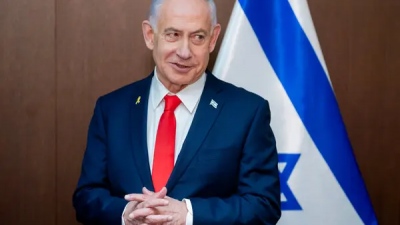
Israeli Prime Minister Benjamin Netanyahu expressed his certainty that Iran no longer has the capacity for uranium enrichment. As he stated, Iran's uranium enrichment capabilities, as well as its ballistic capabilities, have been significantly degraded. Netanyahu emphasized that the war has three goals: "First, to crush Iran's nuclear program. Second, to crush the ballistic program. Third, to create the conditions for the Iranians to take their fate into their own hands."
At this point, he argued that air strikes alone are not enough against the Iranian regime, which he said could remain even in a weakened state. "A ground component is also needed," he said, without specifying exactly what he meant. Furthermore, Netanyahu underlined that Iran "can no longer enrich uranium" and is no longer able to manufacture ballistic missiles, noting that the stockpiles of missiles and drones "have suffered enormous damage." "We are winning and Iran is being destroyed," Netanyahu said, stating that Iran "is weaker than ever" in contrast to Israel, which he described as a regional power "and some would say a global power."
Furthermore, he characterized as fake news the idea that Israel dragged the US into a conflict with Iran. "Does anyone really believe that someone can tell President Trump what to do? Come on," he said, adding that the American president "always makes his decisions based on what he considers good for America." Regarding the Iranian leadership, Netanyahu said he is not sure who is ruling Iran right now. "Mojtaba Khamenei has not appeared; we haven't seen him," he noted, emphasizing that there is "great tension" between officials at the top of the Iranian regime, while pointing out that Israel is seeing "cracks" in both the political leadership and units in the field. Furthermore, he said that "the war will end faster than people think."
IDF: "We are not even halfway" through the campaign against Iran
The Chief of General Staff of the IDF, Lieutenant General Eyal Zamir, stated in an internal discussion that Israel "has not even reached the halfway point" of its campaign against Iran. Meanwhile, senior military officials suggest there is no immediate timetable for ending the war—a sentiment also supported by US Secretary of Defense Pete Hegseth. According to Channel 12, the IDF leadership is unanimous in its opposition to halting operations at this stage. Security officials reportedly fear that ending the campaign now could lead to a renewal of hostilities within months, despite recent attacks that have significantly degraded Iran's capabilities in the ballistic missile sector.
www.bankingnews.gr






Σχόλια αναγνωστών